
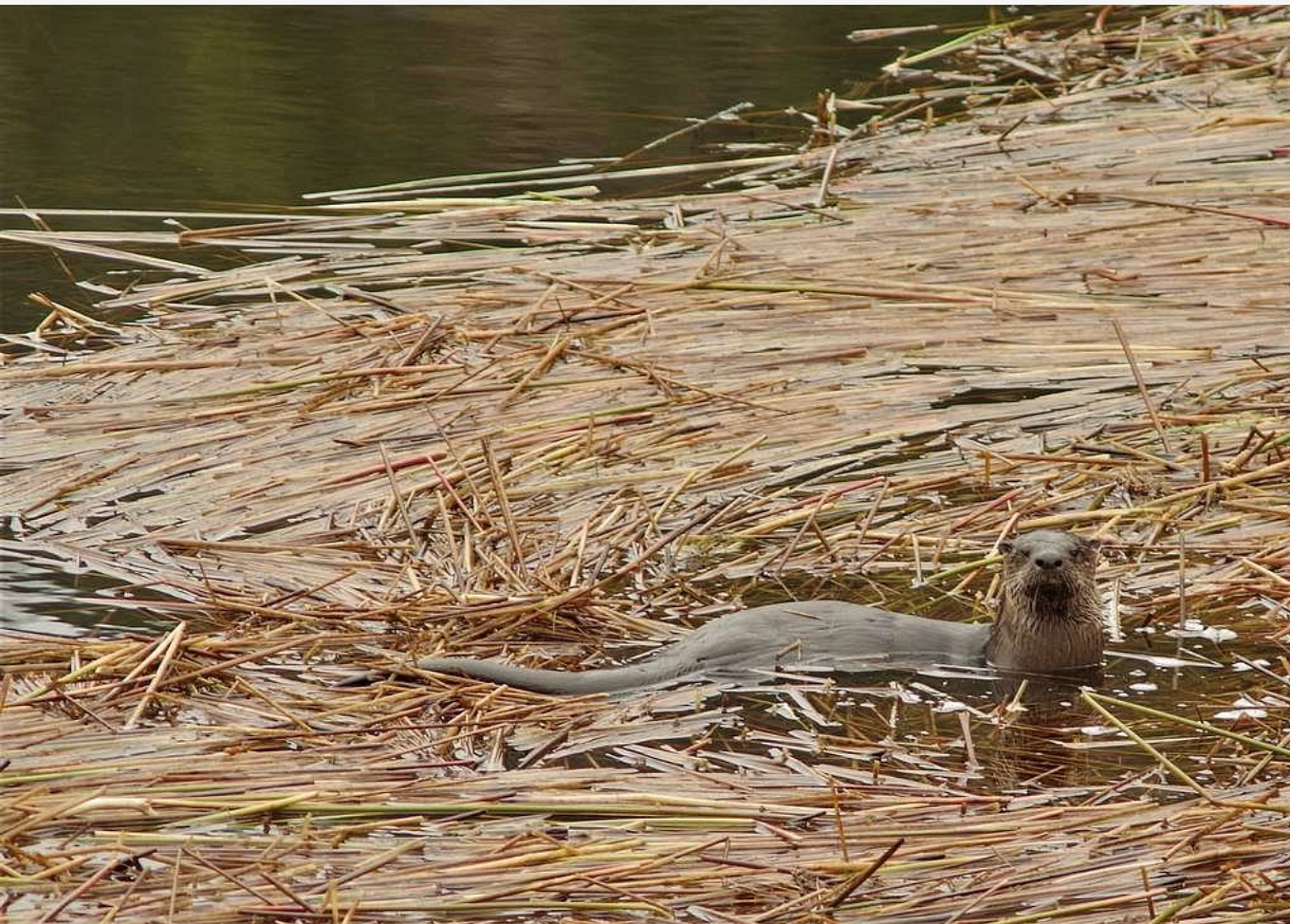
To encounter a river otter in the wild is to know joy. How could it be otherwise? “Otters are highly intelligent; their inclination to make a ‘game’ out of almost any activity is almost legendary,” wrote Maine Inland Fisheries & Wildlife biologist John Hunt.
Imagine a mother with two pups, swimming in the river at high tide. Seeing a human, she snorts, splashes, dives; the young ones follow. They surface nearby, look again, snort, splash, dive—otters can stay underwater for up to two minutes. They surface again, a bit farther away. Their deep brown fur turns silver in the water; their webbed feet and streamlined bodies help them navigate the current with ease—more than ease, delight. They seem curious, more bothered than threatened by the stranger in their midst. With their small eyes adapted to hunting in dark water, they are somewhat nearsighted. They sniff and snort.
The river otter likes rivers, of course, but also lakes and beaver flowages and coastal waters, aquatic environments with diverse shoreline vegetation. Otters are active in all seasons, using ice-free waters where available during winter. They spend most of their time in water less than 10 feet deep, where they find their preferred prey of fish, crayfish, crabs. They like to eat in the morning. In the afternoon, they might rest in a beaver den or hollow log, sliding into the water as the sun slips low. They have been known to inhabit old boathouses and duck blinds, the cool shadows beneath waterfront piers and docks, and the rock piles under bridges. Mostly, they are on the move.
Read more at Natural Resources Council of Maine.
 Catherine Schmitt