
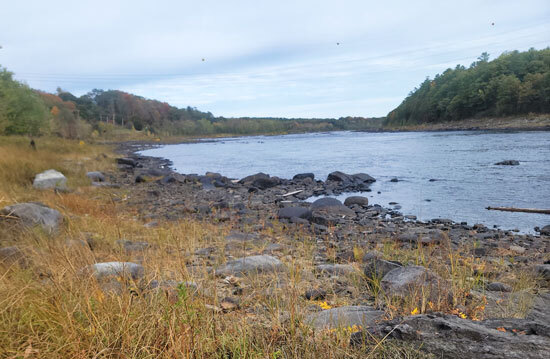
For thousands of years, Wabanaki people were sustained by “sea run” fish that moved between rivers and the ocean. Fish evolved this migratory strategy to ensure they would reproduce successfully, but it also resulted in abundant and nutritious food for people, as hundreds of thousands of salmon and millions of shad, river herring, eels, and other fish traveled along shore and between river banks.
In the last few hundred years, people lost access to their traditional fisheries and fish populations declined. This story is told by tribal citizens in a report published by the Maine Indian Tribal-State Commission, released in audio format at an event on Indigenous Peoples’ Day in October.
Read the story in The Working Waterfront.
 Catherine Schmitt