
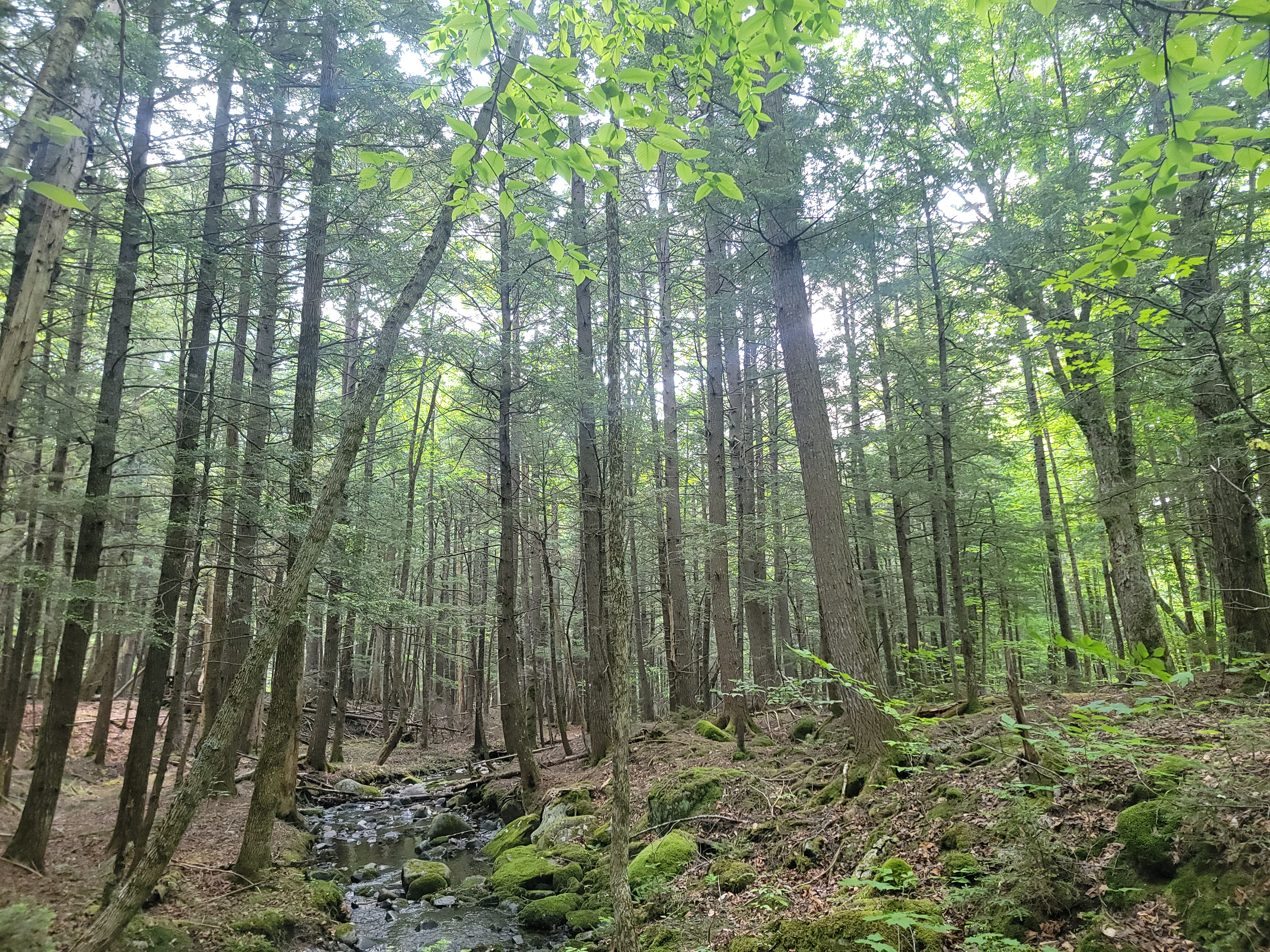
As the climate changes, the place now called Maine will become too warm and dry for many species of tree that currently fill the region’s forests. What does this mean for Maine’s forested landscapes, especially along the coast? And what roles can/should land trusts play in helping ensure forests persist into the future?
In this 5-part series with Maine Coast Heritage Trust and Schoodic Institute, I explore the varied meanings and implications of “assisted migration” of forest trees.
Part 1, Laying the Groundwork, introduces the concept of assisted forest migration, the motivation behind it, and the questions it raises.
Part 2, Testing the Edges, describes some of the scientific experiments that are underway, including in Acadia National Park, to answer the question, “Can we do it?”
Part 3, Hands in the Dirt, visits some land trust preserves where volunteers are already planting trees from warmer climates. What are their motivations, and observations?
Part 4, Memories of Migration, goes deeper into history to understand tree migration and human relationships in the past, and how the Penobscot Nation and other Wabanaki communities are leading efforts to adapt to a changing climate.
Part 5, Trust the Trees, concludes the series by traveling to southernmost Maine, the warmest forest, and looking back on a year’s worth of reporting and learning.
 Catherine Schmitt